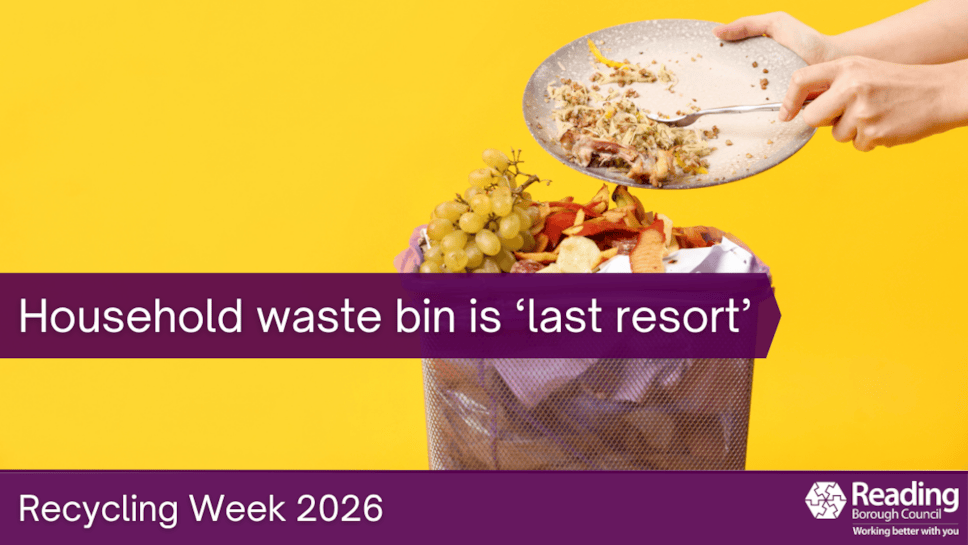
Residents Urged to Think of Household Waste Bin as ‘Last Resort’
- Residents encouraged to think recycling first
- New figures show a 16% increase in food waste collected between December 2025 and July this year, amounting to 721 extra tonnes of recycled food waste in Reading
- Both CO2 and disposal cost savings for the town as a result
Reading residents are being encouraged to think of their general household waste bin as their "last resort" bin, using recycling and food waste bins first whenever possible.
This Recycling Week, new food waste figures show the borough is already seeing significant environmental and financial benefits from the service in particular.
Reading Borough Council recorded an average 16% increase in food waste collected between December 2025 and July 2026, resulting in an additional 721 tonnes of food waste being captured and recycled rather than ending up in household waste bins.
By diverting food waste away from general household rubbish, the Council has already saved more than £70,000 in disposal costs. This is amounts to a saving of 508 tonnes of CO2, which could power 3 million kettles boiled.
Food scraps and leftovers which cannot be eaten - including fruit and vegetable peelings, meat, fish, bones, tea bags and coffee grounds - can all be placed in food waste bins for recycling.
To support the push, the Council will be delivering free food waste caddy liners to all residents this November.
Councillor Finn McGoldrick, the Council's Lead for Environmental Services and Community Safety, said:
"It's fantastic to see more Reading residents making use of their food waste bins and helping to reduce the amount of waste we send for disposal.
"The increase we've seen over the past six months or so is good news for the environment and the taxpayer.
"As we mark Recycling Week, I encourage everyone to think twice before putting anything in their household waste bin, and to consider it a ‘last resort’ bin from now on."