Reading pupils on a mission to move
- A record 29 Reading schools taking part in Walk to School Week between 18-22 May
- The Council has funded activity packs to support pupils in the annual challenge to walk, wheel or cycle to school
A record number of schools will be taking part in Walk to School Week in Reading this month.
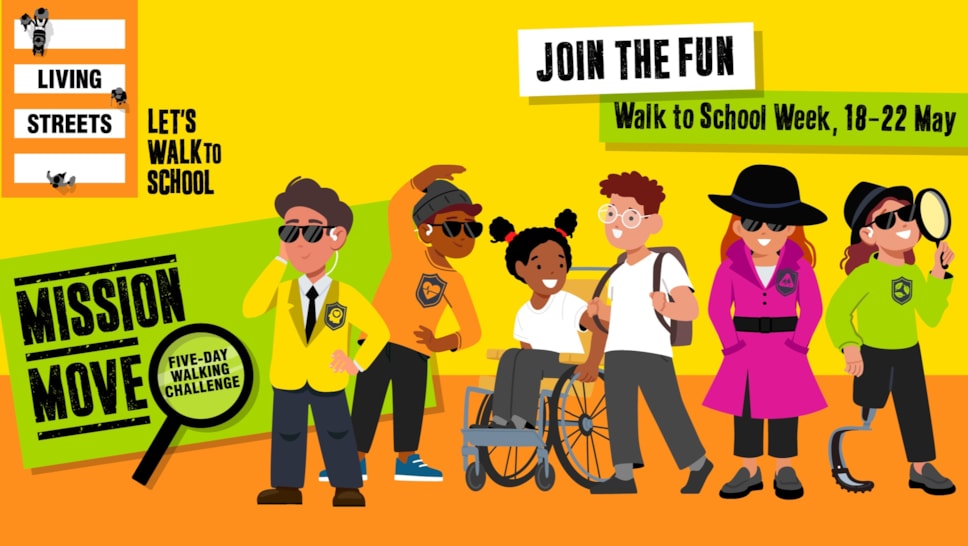
Pupils from 29 Reading primary schools will be walking, cycling or scooting to school as part of the annual national event run by Living Streets between 18-22 May.
Last year, pupils from 26 Reading schools joined 250,000 children nationally in Walk to School Week and this year is set to be even bigger.
The Council has once again funded classroom packs for the five-day challenge plus Little Feet packs for younger children in 24 schools and nurseries.
Walk to School Week supports the Council’s aims of encouraging more active travel, such as cycling and walking, and reducing traffic congestion.
As well as saving money on fuel, families benefit from better physical and mental health, improved air quality and a safer environment around the school gates.
This year, pupils will set off on a special operation, codename Mission Move, to complete the five-day walking challenge and activity packs will be full of fun tasks for them to undertake on their way to school and in the classroom.
Pupils can track their progress each day in individual activity diaries and on an interactive classroom wallchart with rewards on offer to help keep up motivation.
Children who live a little way from school can still join in by hopping out the car or stepping off the bus 10 minutes away from school and walking the rest of the way.
Councillor John Ennis, Lead Councillor for Climate Strategy and Transport, said:
“I am so pleased that so many schools have signed up for the Walk to School Week packs funded by the Council and hope all children taking part enjoy the fun challenge.
“Walking, cycling or wheeling to school is a great way to start the day and sets children up to be alert and ready to learn.
“It also saves money on fuel, helps reduce congestion, improves air quality and benefits the health of children and residents in the local community.
“Only about 50% of pupils walk to school in the UK so this is a great opportunity to give it a go and maybe keep it up once the week is over.”